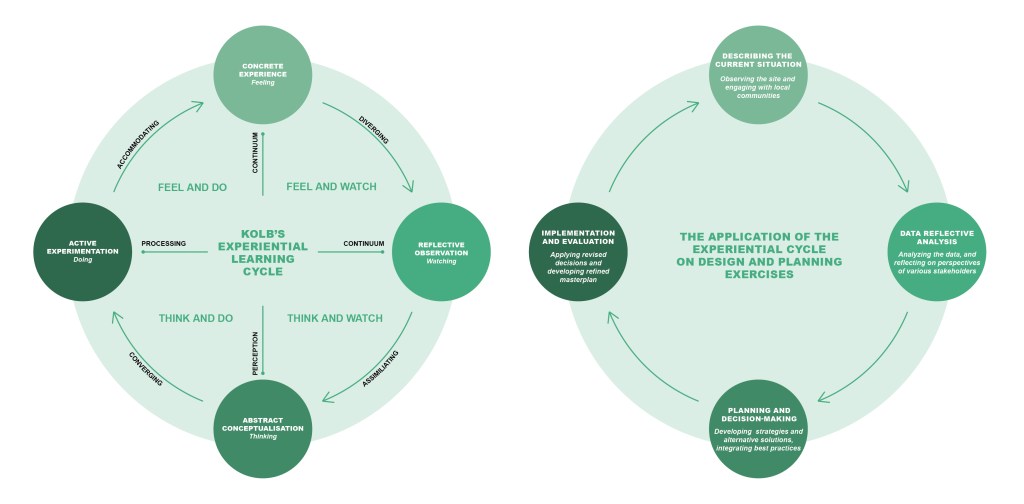
Landscape architecture educators often continue teaching and introducing innovative ideas with limited opportunities for critical reflection, particularly regarding the disconnect between pedagogical frameworks and the realities of practice in landscape higher education. Drawing on over two decades of experience, including the development of new programs, the successful management of established curricula, and the transformation of underperforming ones, this reflective piece explores how teaching theories in landscape architecture can better align educational practices with students’ engagement in spatial, ecological, and cultural complexities. The reflection emphasises the importance of encouraging students to critically evaluate their design decisions within broader social, environmental, and ethical contexts. It also highlights how acknowledging diverse learning styles and cultural backgrounds contributes to a more inclusive and responsive learning environment. Respecting individual perspectives fosters a collaborative studio culture, where varied experiences enrich both the design process and its outcomes. Finally, the piece considers how the integration of digital tools in landscape architecture education can significantly enhance students’ abilities in visualisation, analysis, and communication. These skills are increasingly essential in contemporary design practice.
Read the full article here.
