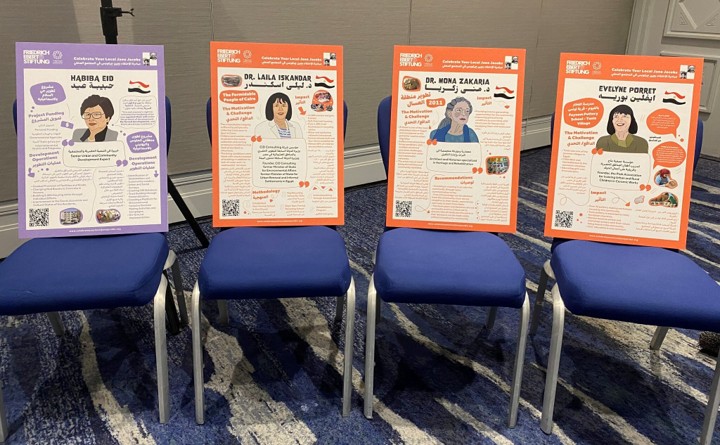
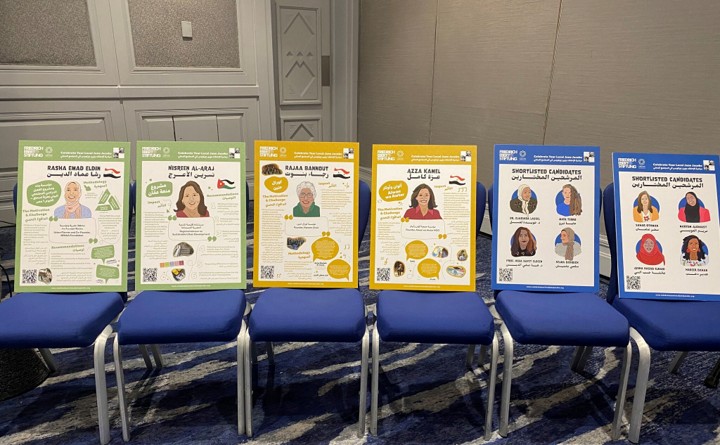
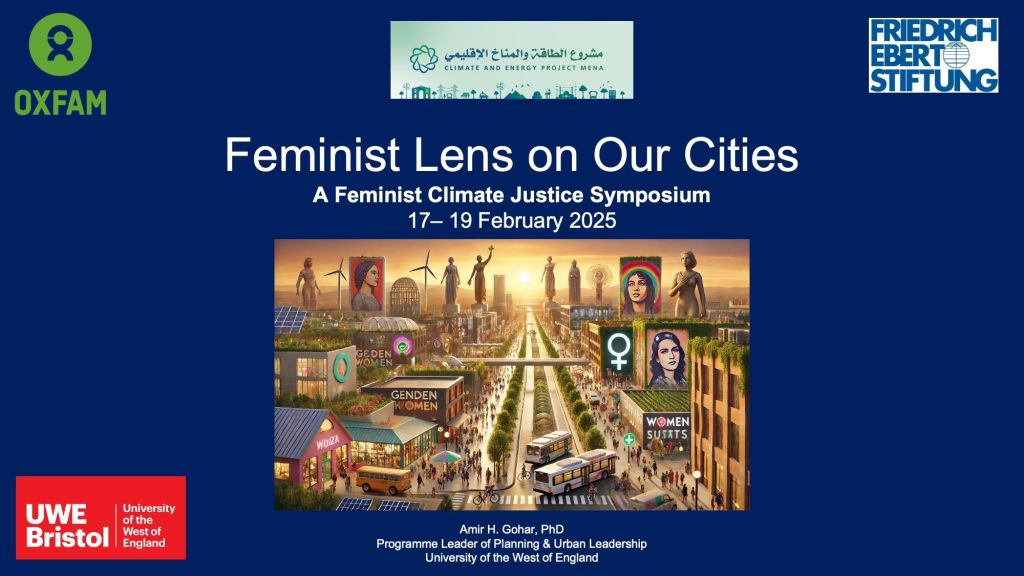
I was pleased to participate in the Feminist Climate Justice Symposium in Amman, contributing to two impactful sessions: (1) Feminist Lens on Our Cities and (2) Celebrate Your Local Jane Jacobs – Round 2025. It was inspiring to connect with like-minded women who are leading the feminist movement with remarkable knowledge and dedication.
The discussions went far beyond superficial gestures, such as adding pink benches to public spaces or increasing women-only carriages in metro systems. Instead, we unpacked critical issues including climate justice, governance, contemporary colonial power, phasing out of fossil fuel, impact of climate on rural women in Iraq, white supremacy, recent conflicts in the region, and, of course, the impact of Trump-era policies.
Key Takeaways on my contribution:
🔹 It is essential to distinguish between universal values and those specific to local contexts.
🔹 Building partnerships with other movements, including social and environmental initiatives, is crucial for the success of the feminist movement.
🔹 Women, alongside men, have significantly shaped the built environment through informal urbanism, often more so than through formal planning processes.
🔹 Even within formal planning, poor outcomes can occur if the ecosystem is predominantly male-led and lacks inclusivity.
🔹 Some international agencies have dedicated departments focused on women’s issues, yet other divisions continue to operate traditionally, limiting the overall impact of women in planning.
🔹 The link between social and ecological stresses and everyday experiences should be communicated more clearly to the general public. This includes helping citizens understand how issues like domestic violence are interconnected with broader challenges such as climate change.
🔹 Even when a design project is led by women, if there is a lack of community engagement and stakeholder involvement, the outcomes often remain insufficient and continue to reflect the same underlying issues.
🔹 Examples such as Zaha Hadid and Lina Ghotmeh, among others who have achieved remarkable individual success in designing and leading mega projects, highlight that such achievements alone are not enough to contribute meaningfully to transformative change within communities or the built environment.
🔹 Men, especially allies, play a crucial role in the feminist movement. Their exclusion only limits progress, whereas inclusion fosters collective action and societal change.
Acknowledgments:
🔸Special thanks to the University of the West of England (UWE) Bristol for their support, particularly (Deepak Gopinath)
🔸Gratitude to Friedrich Ebert Stiftung MENA especially (Dina Kisbi)
🔸Appreciation to Oxfam MENA for co-hosting this meaningful conference, with thanks to (Safa Jayoussi)