Following the 1979 peace treaty and the return of the Sinai Peninsula to Egypt in 1982, the country began focusing on its environmental assets, including national parks. Egypt’s national parks cover diverse environments, from mountains, deserts, and oasis to coastal and urban areas. Law 102 of 1983 authorizes the Prime Minister to designate areas as national parks, defining their boundaries and management principles. To date, 24 national parks have been established under this law.
The Red Sea parks are a unique, underutilized resource. However, tourism development has constantly threatened their fragile ecosystems. Despite initiatives to minimize these impacts, development patterns remain largely unchanged, and knowledge of proper landscape planning remained within limited number of professionals.
CHALLENGES OF CURRENT STRATEGIES
Ecotourism and national parks share a complex relationship. Balancing development and conservation is a contentious issue. Ecotourism is often seen as a way to ensure parks’ economic sustainability, but it carries significant risks, particularly in the case of the Red Sea.
1. Technical Challenges
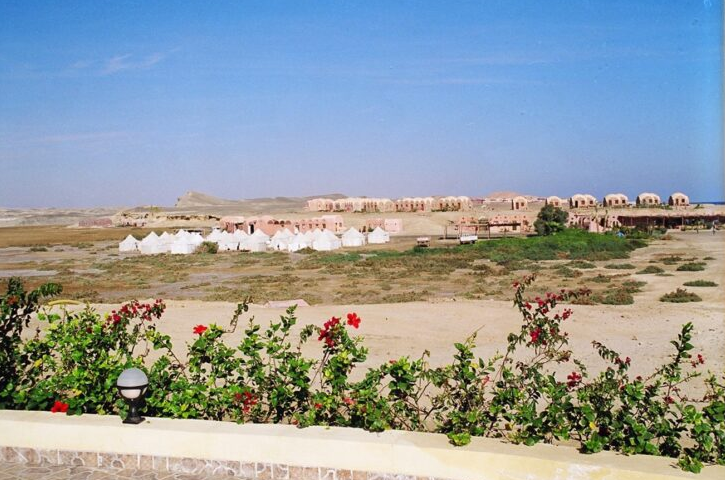
(i) Understanding of Ecotourism: Ecotourism is often misunderstood, with numerous definitions muddying its purpose. The International Ecotourism Society defines it as “responsible travel to natural areas that conserves the environment, sustains the well-being of local people, and involves interpretation and education”. In Egypt, this concept is not fully realised in park development, leading many projects to self-identify as “ecotourism” without meeting true environmental protection standards. Wadi El-Gimal National Park illustrates the need for better local understanding and institutional frameworks to develop eco-lodges.
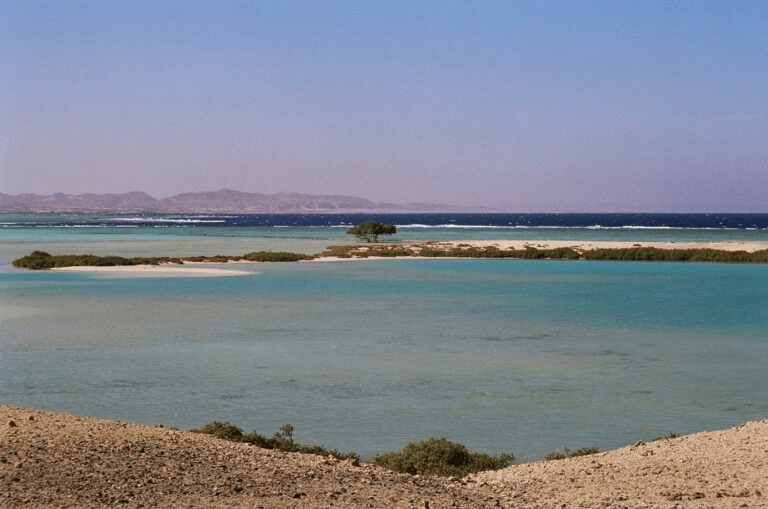
(ii) Planning the Landscape: While experts in flora, fauna, geology, and marine environments contribute to park development, the spatial dimension remains underemphasized. Landscape planners, essential for designating protected areas and determining development intensity, are often absent from these processes.
(iii) Designing for Ecotourism (Eco-lodges): Egypt’s parks span diverse regions, mountains, oases, coastal plains, each with unique communities and building styles suited to local cultural and ecological contexts. However, most eco-lodge designs are either inspired by Nile Valley architecture or imported from countries with ecotourism traditions, neglecting Egypt’s diverse environmental needs.
2. Institutional Challenges
(i) Lack of Coordination between authorities: National parks fall under environmental authorities, while tourism projects are managed separately by tourism authorities. The lack of coordination between central and local governments hampers integrated planning and development solutions.
(ii) Insufficient Stakeholder Consultation: Local communities are rarely consulted on park plans, while developers often lack awareness of the local context, leading to issues like gentrification, relocation of communities, and negative impacts on livelihoods. Developers also risk building in ecologically sensitive areas, such as floodplains or mangrove zones.
(iii) Climate Change and Ecological Dynamism: Current shoreline regulations do not consider risks from sea-level rise or habitat changes, such as turtle nesting sites or mangrove zones.
(iv) Urban Expansion: Increasing land values near cities have led to urban encroachment on parklands. Environmental authorities often allocate parkland for ecotourism projects to generate revenue, but the competition between land uses undermines conservation efforts.
SOLUTIONS & THE ROLE OF LANDSCAPE ARCHITECTS
Fieldwork in Egyptian national parks suggests that ecotourism can be part of the solution if the following recommendations are adopted:
1. Understanding the concept of ecolodge beyond architecture: Ecolodges often focuses on architectural aesthetics, which is too limited. Egypt’s parks encompass diverse social structures, including nomadic communities, and require localized parameters that go beyond vague recommendations like “using local materials”. These parameters should be integrated into environmental laws rather than optional guidelines.
2. Consult local community: Consulting local communities provides invaluable insights, such as historical knowledge of floods, wind patterns, and migratory paths of fauna. Public participation should be extensive, involving nomadic communities in the planning process and establishing communication channels between developers and local residents.
3. Role of landscape planners: Landscape planners are essential in integrating ecological and social aspects into park management. Their involvement can minimize resource conflicts and ensure that tourism development supports ecosystem sustainability. For example, in the Red Sea parks, landscape planners help preserve the roles of acacia and mangrove trees, vital to the ecosystem.
4. Land suitability mapping: Land suitability maps identify areas for protection and those less suited for development. This helps avoid placing tourism developments in vulnerable zones like floodplains.
5. Prioritize parklands over real estate development: Parklands should not be forced to compete with real estate for value. Urban expansion should respect park boundaries, particularly in cities like Cairo, where space is limited.
National parks are crucial to Egypt’s environmental heritage, but they are under threat from urbanisation and unchecked tourism development. Involving landscape planners early in the decision making and development process can help protect these parks, minimise conflicts, and resolve ongoing challenges. Collaboration between local communities, developers, and planners is essential to ensure that ecotourism supports the environment rather than harms these delicate ecosystems.
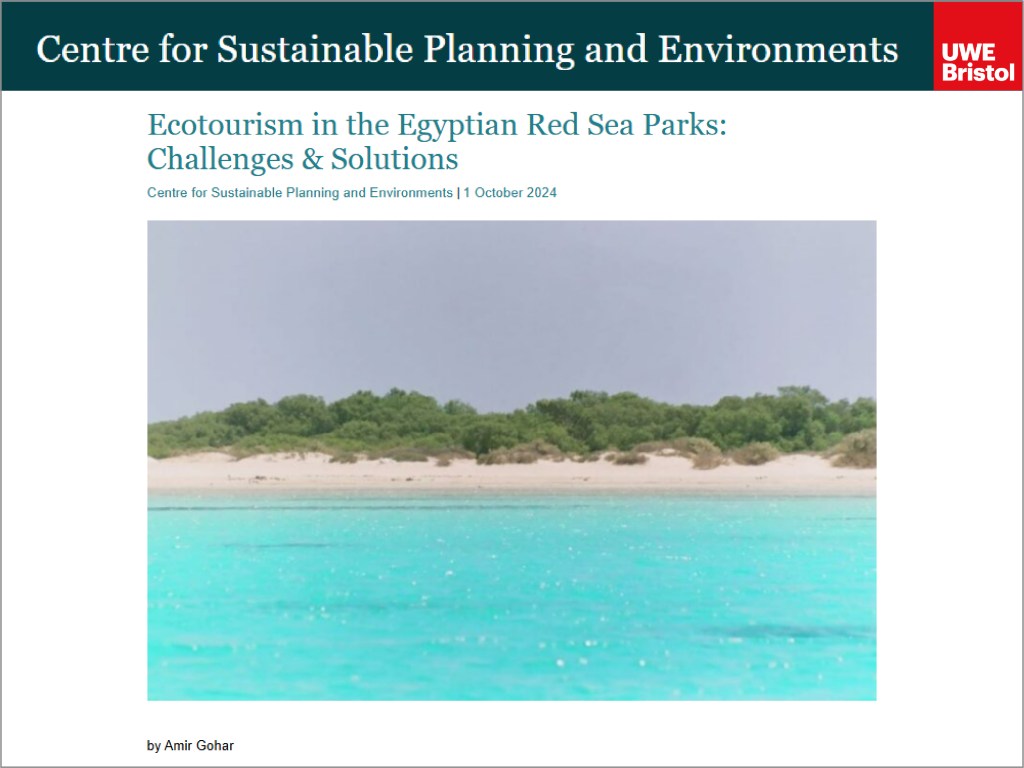
Featured image credits: Mangrove patches looking towards Wadi El-Gimal Island (Photo by Gohar).
View the article here.
 Amir Gohar, PhD. FHEA. AMLI.