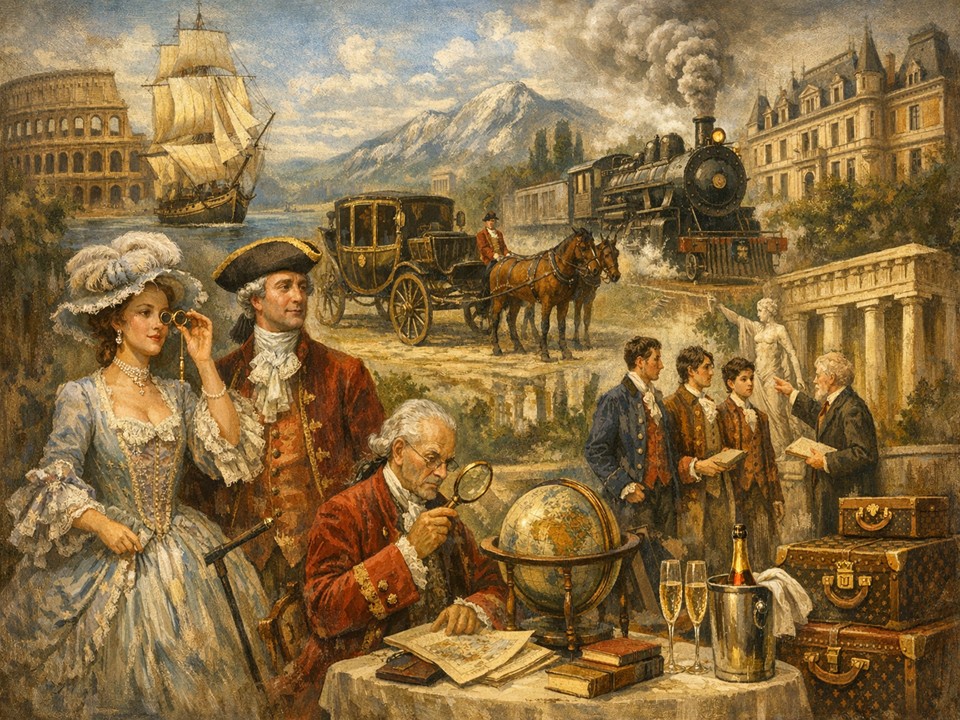
1. Aristocratic and Class-Based Tourism
In its early historical phases, tourism was predominantly shaped by rigid social hierarchies, with travel largely confined to aristocratic and elite social groups. Mobility functioned as a cultural and symbolic practice through which individuals cultivated social distinction, intellectual refinement, and cultural capital. The tradition of the European Grand Tour exemplifies this model, wherein travel was institutionalized as a formative experience designed to reinforce status, taste, and education. Destinations, modes of transport, and accommodations were selected to reflect privilege and exclusivity, positioning tourism as a mechanism for reproducing social stratification and embedding travel within broader systems of class-based identity formation.
2. Nature-Oriented and Resort-Based Tourism (Club Med Model)
The twentieth century marked a structural transformation in tourism, characterized by a growing emphasis on leisure, environmental engagement, and mass accessibility. Resort-based models, such as those popularized by Club Med, reconfigured travel as an experience centered on relaxation, recreation, and immersion within curated natural settings. This paradigm promoted the therapeutic and aesthetic value of landscapes, framing nature as both a commodity and a site of psychological restoration. The institutionalization of standardized hospitality and packaged travel facilitated broader participation across socioeconomic groups, thereby contributing to the democratization of tourism while simultaneously shaping new spatial and environmental relationships between visitors and host destinations.
3. Educational and Self-Development Tourism
As global mobility expanded, tourism increasingly assumed an educational and reflexive dimension, positioning travel as a vehicle for personal development and intercultural learning. This model foregrounds language acquisition, cultural immersion, and experiential knowledge production, wherein tourists engage directly with local social, cultural, and institutional contexts. Travel is conceptualized as an informal pedagogical process that fosters critical self-awareness, cross-cultural competence, and intellectual growth. In this framework, tourism transcends recreational consumption and becomes a practice of knowledge exchange, contributing to the formation of globally oriented identities and reinforcing the role of mobility in lifelong learning.
4. Adventure Tourism and Embodied Risk
The emergence of adventure tourism reflects a conceptual shift toward embodied experience, physical challenge, and the deliberate engagement with risk as central components of travel. This form of tourism privileges sensory immersion and corporeal participation through activities such as high-altitude trekking, wilderness exploration, and extreme sports. Rather than emphasizing symbolic status or purely cognitive enrichment, adventure tourism situates the body as the primary site of meaning-making and self-actualization. This paradigm aligns with broader cultural valorizations of authenticity, resilience, and experiential depth, framing travel as a means of negotiating uncertainty and constructing individualized narratives of achievement and transformation.
5. Philanthropic, Ethical, and Solidarity-Based Tourism
Contemporary tourism discourse increasingly incorporates ethical responsibility and social engagement, giving rise to philanthropic and solidarity-based travel models. These approaches prioritize reciprocal relationships between visitors and host communities, often through volunteerism, community-based development initiatives, and socially conscious consumption practices. Tourism is reframed as a form of moral and civic participation, wherein travelers assume roles as contributors to social well-being, environmental stewardship, and local empowerment. This model underscores tourism’s potential as a platform for fostering global solidarity, addressing structural inequalities, and advancing principles of sustainability and social justice within the context of transnational mobility.