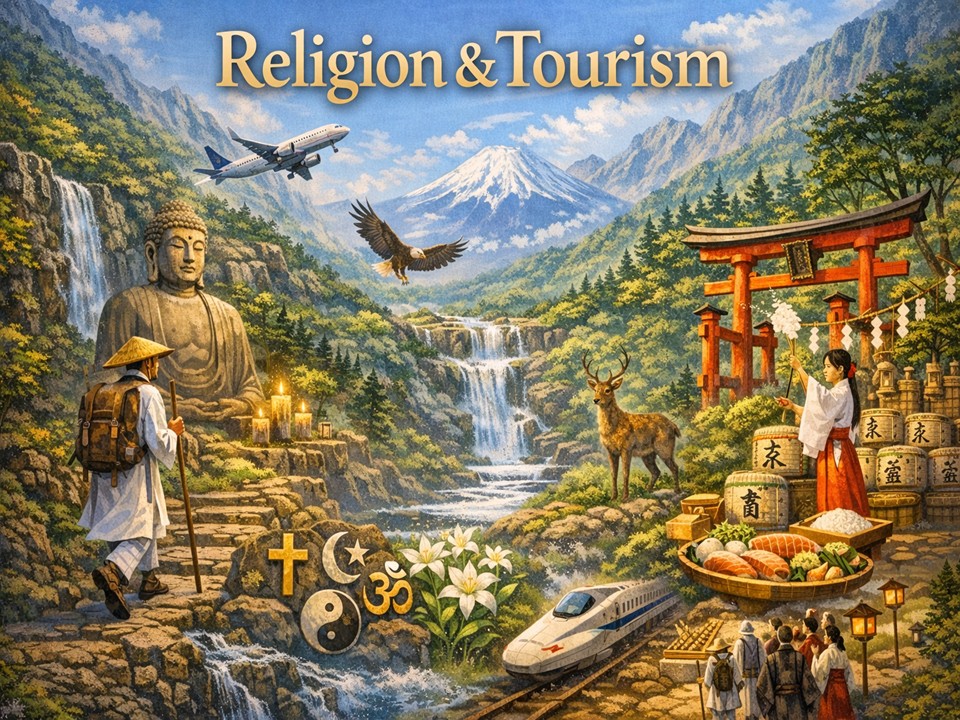
Across cultures, belief systems often begin with how people understand life, spirit, and the world around them. In many Western traditions, a distinction is drawn between living beings and inanimate objects, rooted in the idea of anima (that which moves, breathes, and possesses life). In contrast, Japanese spiritual traditions, particularly Shinto, are grounded in “animism”: the belief that all elements of the natural world (mountains, forests, rivers, rocks, and trees) are imbued with spirit and serve as dwelling places for souls and deities. Nature is not merely observed; it is revered as sacred.
This perspective is closely tied to the experience of awe (the profound “wow” effect) felt in the presence of vast mountains, powerful waterfalls, or majestic animals. Such moments create a sense of humility and connection, reminding people of forces greater than themselves. In Japan, this reverence becomes especially visible in the symbolism of white flowers emerging from dark forests, believed to mark the descent of the gods from the mountains. Consuming offerings from the land is therefore understood as partaking in something divine, which echoes the universal expression of gratitude often captured in the phrase “thank God.”
Ritual and celebration further express these beliefs. Sake, the traditional rice wine, is first presented at shrines in large barrels as an offering before it becomes part of communal festivals. People gather in ceremonial attire, drink, and celebrate together, transforming spiritual practice into a shared cultural experience that reinforces social bonds.
Religious diversity raises deeper questions about tolerance and coexistence. While the presence of multiple belief systems can encourage openness, it can also generate tension. Those who convert to a faith sometimes adopt more rigid views than those born into it, creating sharper boundaries between “belief” and “difference.” In the Japanese context, this contrast is reflected in the complementary roles of Shinto as the religion of life and renewal, and Buddhism as the religion of death and remembrance, together forming a balanced spiritual framework rather than a single, exclusive truth.
Pilgrimage offers another lens into how people step outside ordinary life. Walking sacred routes becomes both a spiritual journey and a form of escape, a temporary departure from daily routines. Yet modernity compresses this experience: after days or weeks of reflective travel, one can return home in hours, sealed inside an airplane moving at hundreds of miles per hour. This tension between slowness and speed mirrors the broader conflict between contemplation and contemporary life.
For some, pilgrimage and sacrifice emerge at moments of transition, toward the end of life, or at the close of education, when time feels scarce and meaning feels urgent. Sacrifice, in this sense, becomes an exchange: the willingness to give up comfort, effort, or certainty in the hope of growth, insight, or reward. It reflects the enduring human belief that transformation requires commitment that, in one form or another, there is no gain without giving something of oneself.