Introduction: From Inheritance to Constructed Meaning
The concept of “heritage” originated as a collective generalisation derived from the idea of individual inheritance from a deceased ancestor. Over time, this narrow legal and familial understanding expanded into a broader cultural and social construct that encompasses material, immaterial, and symbolic dimensions of the past. Contemporary scholarship increasingly recognizes heritage not as a fixed legacy, but as a dynamic process shaped by interpretation, power relations, and present-day needs (Lowenthal, 1985; Smith, 2006).
The Historical Expansion of Heritage
The evolution of heritage as a public and institutional concern illustrates how societies have progressively widened its scope. In England, the renaming of the custodial body for state-maintained monuments as English Heritage marked a shift from preservation of isolated monuments toward a more comprehensive cultural mandate (Hewison, 1987). In France, this expansion went further, incorporating everyday elements such as village wash houses, small churches, local songs, dialects, crafts, and vernacular skills into the national heritage narrative (Choay, 2001).
Subsequently, the definition of heritage broadened to include modern conditions and practices influenced by the past, blurring the boundary between historical legacy and contemporary cultural life. This shift aligned heritage with the domain of “high culture” and leisure, culminating in the institutionalization of culture within governmental portfolios. In Britain, this was symbolised by the creation of a ministry responsible for arts, parks, and cultural programming, popularly dubbed the “Minister of Fun”—reflecting the growing entanglement of heritage, entertainment, and public consumption (Hewison, 1987).
Heritage, Governance, and Cultural Authority
Not all societies have embraced heritage through formal institutional frameworks. In many Indigenous and Aboriginal contexts, cultural continuity and resource management rely more heavily on local bylaws and customary practices than on centralized regulations (Smith, 2006). This contrast highlights the plurality of governance models through which heritage is defined, protected, and transmitted. At the same time, heritage has become deeply embedded in political and ideological discourse. In certain contexts, it has been appropriated by extremist or exclusionary movements, where “heritage” functions as a euphemistic cloak for ethnic or racial exclusivism. This politicization has raised growing concern over the uncritical expansion of the term and the breadth of meanings it is made to carry (Tunbridge & Ashworth, 1996).
The Heritage Industry and Commodification
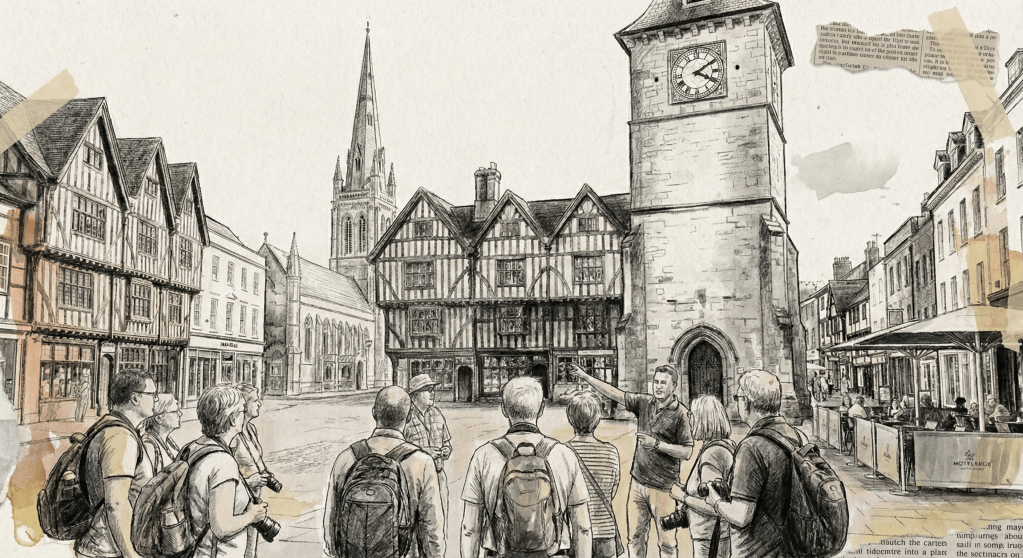
The rise of what is often termed the “heritage industry” reflects the close relationship between heritage and tourism. Heritage products are frequently marketed through their association with a “remembered past,” transforming cultural memory into a sellable experience. This process has shifted heritage from a “sellable past” to a “culturally distinctive present,” where identity, place, and experience are packaged for contemporary consumption (Hewison, 1987; Urry, 1990).
The concept of the “ecomuseum” exemplifies this transition by framing people and places themselves as heritage, emphasizing lived experience, community participation, and local identity rather than isolated artifacts (Davis, 2011). As a result, the term “heritage” has been appended to an increasingly wide range of products and practices, from architecture and landscapes to food, fashion, and lifestyle branding.
However, critics argue that the buying and selling of the past risks producing an economy based on a product devoid of intrinsic value. At best, this creates a symbolic marketplace of memory; at worst, it reflects a societal retreat into nostalgia driven by economic or cultural failure (Lowenthal, 1985). Moreover, the exploitation of heritage resources exposes them to damage, distortion, and selective representation.
Heritage, Time, Space, and the Politics of Selection
Heritage operates across both temporal and spatial dimensions, creating a persistent dilemma in defining what qualifies as heritage, who makes that determination, and for what purpose. While history seeks to reconstruct and analyze the past, heritage selectively identifies, describes, and stages aspects of the past for present-day experience. In this sense, all heritage can be understood as “someone’s heritage”—a product of creative imagination shaped by the needs, values, and aspirations of its creators (Smith, 2006).
Both history and heritage make selective use of the past, transforming it through interpretation. For contemporary consumption, heritage undergoes a process of commodification, whereby meaning is translated into marketable form (Urry, 1990).
A Model of Heritage Production
Heritage production can be understood through three interrelated components:
1- Resources
These include a wide range of tangible and intangible elements, such as folklore, monuments, music, rituals, landscapes, and collective memories.
2- Transformation
Resources are converted into “products” through interpretation. This process involves critical decisions about what is transmitted, which narratives are prioritized, and which audiences are addressed. Importantly, what is traded is not merely the physical artifact, but the intangible ideas, emotions, and meanings associated with it (Smith, 2006).
3- Product
The heritage product emerges as a response to specific social, cultural, or economic needs, whether related to identity formation, tourism development, political legitimacy, or community cohesion.
Authenticity, Preservation, and Continuous Re-Creation
The preservation of surviving artifacts contributes to the construction of a record of what has occurred and to varying degrees of authenticity. Even when historical accuracy is contested, material traces serve as anchors for interpretation and meaning-making (Lowenthal, 1985).
Nevertheless, heritage is not a static inheritance. It is a created phenomenon, continuously reconstituted in response to changing social attitudes, cultural demands, and political contexts. This fluidity invites both innovation and critique.
Critical Perspectives and Power Relations
Several critiques emerge in relation to heritage production:
• Plurality of Interpretation: The same past can generate multiple, often conflicting, narratives.
• Commercialisation and Degradation: Popularisation and market-driven presentation may lead to simplification or distortion.
• Monopolisation: Certain groups, often elites or those with specific cultural capital—may exert disproportionate influence over what is recognised as heritage and how it is represented (Tunbridge & Ashworth, 1996).
Tourism management tools, such as increased entry fees or taxation, can unintentionally restrict access to heritage sites, reinforcing social and economic inequalities. While such measures may sometimes benefit conservation efforts, they can also limit public engagement and deepen patterns of exclusion.
Empirical experience in cultural and heritage sites often confirms these critiques. Heritage is demonstrably commercialized; interpretation shapes what is recognized as heritage; and elite or interest-based groups frequently wield greater influence than the general public. If this were not the case, the distribution of tourist visitation would align more closely with recognized levels of heritage significance. In practice, some World Heritage Sites attract fewer visitors than less formally significant locations, with commercialization and accessibility playing a decisive role.
Perception, Place, and the Built Environment
Heritage is shaped by perception and conception, echoing Lynch’s (1960) work on how people code and decode places through mental mapping and experiential interpretation. Heritage is associated with place in three primary ways: monuments, objects, and past events.
The built environment, however, cannot be understood solely as a physical construct. It represents a complex assemblage of sensory, cultural, and social experiences. In reality, it is impossible to locate environments at the extreme ends of a nature–human spectrum; instead, most landscapes exist as hybrid cultural-nature systems.
Sustainability and the Integration of Cultural and Natural Heritage
The integration of cultural and natural heritage is increasingly framed as a core principle of environmental management. This approach extends the concept of sustainability beyond the maintenance of physical form to encompass social relevance, cultural continuity, and community meaning (UNESCO, 2013). Sustainability, in this sense, is not merely about preserving structures or landscapes, but about sustaining the cultural practices, identities, and values that give them significance.
Conclusion
Heritage is best understood not as a passive inheritance from the past, but as an active, selective, and often contested process shaped by present-day needs and future aspirations. Its production involves resources, interpretation, and consumption, all mediated by power, perception, and commodification. While heritage can foster identity, continuity, and sustainability, it also carries risks of exclusion, distortion, and politicisation. A critical, inclusive, and reflexive approach is therefore essential to ensure that heritage remains a meaningful and socially relevant practice rather than a static or commercialised artifact of memory.